


How Much Is a Used Motorcycle? Price Guide
- Rebel Racing Motorsports

- 3 days ago
- 5 min read
A clean-looking bike with a low price can turn into a money pit fast. So, how much is a used motorcycle? The honest answer is that it depends on the type of bike, its condition, mileage, service history, title status, and what it will take to get it safely back on the road. In Southern California, where year-round riding keeps demand strong, buying smart matters just as much as finding a good deal.
A used motorcycle can cost anywhere from a few thousand dollars for an older beginner bike to well over $15,000 for a late-model cruiser, sport bike, touring machine, or specialty model. The number on the price tag is only the starting point. Tires, maintenance, registration, gear, insurance, and repairs all affect what you will really spend.
How Much Is a Used Motorcycle Worth?
Most used motorcycles fall into a few broad price ranges. Older small-displacement street bikes, scooters, and beginner-friendly motorcycles commonly land in the $2,000 to $5,000 range when they are running well and have clean paperwork. Mid-size bikes, popular cruisers, dual-sports, and newer entry-level sport bikes often sell from $5,000 to $9,000.
Larger V-twins, touring motorcycles, premium adventure bikes, high-performance sport bikes, and low-mile late-model machines can easily run from $9,000 to $20,000 or more. Specialty bikes such as custom bobbers and choppers are harder to price because the quality of the build matters more than the list of aftermarket parts.
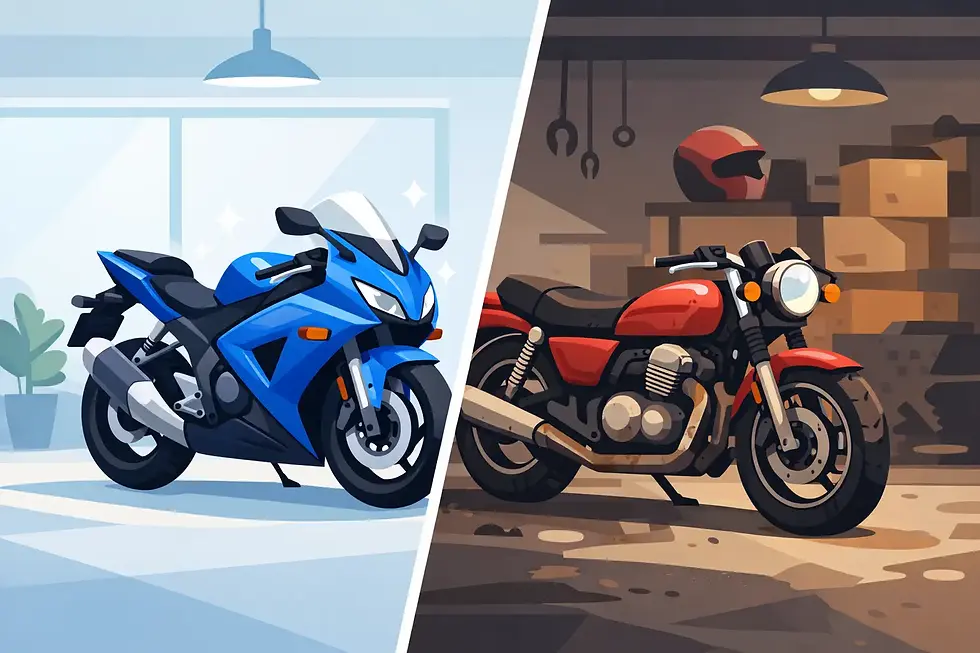
Those ranges are useful starting points, not guarantees. A 10-year-old bike with 5,000 miles, a clean title, fresh tires, and documented service can be worth more than a newer motorcycle that has been stored outside, dropped, or neglected. The best deal is not automatically the lowest-priced bike in the listing feed. It is the bike that needs the fewest expensive surprises after you bring it home.
What Changes the Price of a Used Motorcycle?
Motorcycle type and local demand
Certain motorcycles hold value because riders want them year after year. Reliable Japanese cruisers, lightweight beginner bikes, capable dual-sports, touring models, and popular Harley-style V-twins usually have steady demand. In Temecula, Murrieta, and Riverside County, street-legal dirt bikes and dual-sports can be especially appealing because riders want a machine that can handle local roads and weekend trail access.
Sport bikes can be priced all over the map. A well-kept, mostly stock bike may command a strong price, while one with signs of hard riding, crash damage, or questionable modifications should be priced much lower. Dirt bikes and pit bikes follow a similar pattern. Engine hours, suspension condition, and maintenance tell you far more than shiny plastics do.
Age, mileage, and engine hours
Mileage matters, but it is not the whole story. A motorcycle with 20,000 highway miles and regular oil changes may be a safer buy than a 5,000-mile bike that sat for years with old fuel in the system. Long storage can lead to clogged carburetors or injectors, weak batteries, corroded electrical connections, dry seals, and rusty fuel tanks.
For off-road motorcycles, engine hours are often more useful than mileage. Ask when the oil was last changed, whether valves have been checked, and if the top end or clutch has been serviced. A seller who knows the answers usually maintained the machine. A seller who cannot explain basic upkeep may be passing along a project.
Condition and service records
Service records add real value. Receipts for oil changes, tires, brake work, chains, sprockets, batteries, valve service, and major repairs give you a clearer picture of ownership. They also make it easier to estimate what maintenance is coming next.
A motorcycle with worn tires, thin brake pads, a leaking fork seal, and a loose chain may still be a fair purchase, but the price should reflect the work. It is easy to overlook those items when you are excited about a bike, yet a set of tires, installation, fluids, and a basic service can add up quickly.
Title, registration, and VIN status
Clean paperwork is non-negotiable for most road riders. Verify that the VIN on the frame matches the title and that the seller is the person listed on it. Be careful with vehicles described as having a lost title, lien issues, registration problems, or a title that will arrive later.
A salvage or rebuilt title does not automatically mean you should walk away. It does mean you need to understand why the motorcycle was branded, how it was repaired, and whether the lower purchase price offsets the reduced resale value. Collision damage can hide in forks, frames, wheels, and wiring, so a thorough inspection is worth the time.
Modifications and accessories
Aftermarket upgrades can improve a motorcycle, but they rarely return dollar-for-dollar at resale. Quality suspension work, luggage, protective parts, upgraded lighting, and professional tuning can be useful. Loud exhausts, hacked wiring, missing emissions equipment, and cheap cosmetic parts can lower value instead.
Ask for the original parts when possible. A mostly stock motorcycle is often easier to insure, service, resell, and trust. If a bike has performance modifications, make sure it starts cleanly, idles correctly, and pulls smoothly through the rev range. A modification should make riding better, not create a diagnostic project.
What to Check Before You Agree on a Price
Start the motorcycle from cold if you can. A warm engine can hide difficult starting, smoke, idle problems, and strange noises. Look closely at the frame, steering stops, fork tubes, engine cases, wheels, and exhaust for evidence of a hard crash or poor repair.
Check the tires for date codes as well as tread. Tires can look nearly new and still be too old or hard for safe riding. Test the brakes, clutch, lights, turn signals, horn, and gauges. Inspect the chain and sprockets, or look for belt wear on a belt-drive cruiser. If the bike is liquid-cooled, look for coolant leaks and check that the cooling fan operates when the engine gets warm.
During a test ride, pay attention to straight-line tracking, braking feel, clutch engagement, shifting, vibration, and throttle response. The motorcycle should not pull sharply, wobble, jump out of gear, or make you work around a problem. If you are new to motorcycles or unsure what you are seeing, having a knowledgeable technician inspect it can protect your budget.
Build a Budget Beyond the Sale Price
A realistic used motorcycle budget includes more than the bike. Plan for tax, registration, insurance, a helmet and riding gear, and initial maintenance. Even a well-maintained motorcycle benefits from a baseline check after purchase, especially if you do not know exactly when fluids, brakes, or tires were last serviced.
Set aside a repair reserve instead of spending every dollar on the purchase. On a lower-priced motorcycle, keeping $500 to $1,500 available for service and unexpected parts is smart. On an older touring bike, custom build, or high-mile performance machine, the reserve may need to be higher.
This is also where buying from a local powersports dealership can make sense. A dealership can help you compare inventory, evaluate trade-in value, handle the purchase process, and provide a service department for the maintenance your new-to-you bike needs. At Rebel Racing Motorsports, riders can shop used motorcycles and get help with service, tires, mechanical repairs, and finding hard-to-locate bikes without bouncing between separate shops.
When a Cheap Motorcycle Is Actually Expensive
The riskiest used motorcycles are often priced just low enough to make you ignore obvious issues. A no-start bike, a machine with missing paperwork, or a motorcycle that needs "just a little work" may be a solid project for an experienced wrench. For a rider who wants to get on the road this weekend, it can become a long and expensive delay.
Be especially cautious when the seller will not allow a cold start, refuses a test ride, has no title, or cannot explain recent maintenance. Walk away from pressure tactics. Another motorcycle will come along, and the right one should feel like a confident purchase rather than a gamble.
The best used motorcycle is the one that fits your riding style, your experience, and your total budget. Take your time, inspect it honestly, price the needed work before negotiating, and choose a bike that gets you back on the dirt, road, or weekend ride with confidence.

Comments