


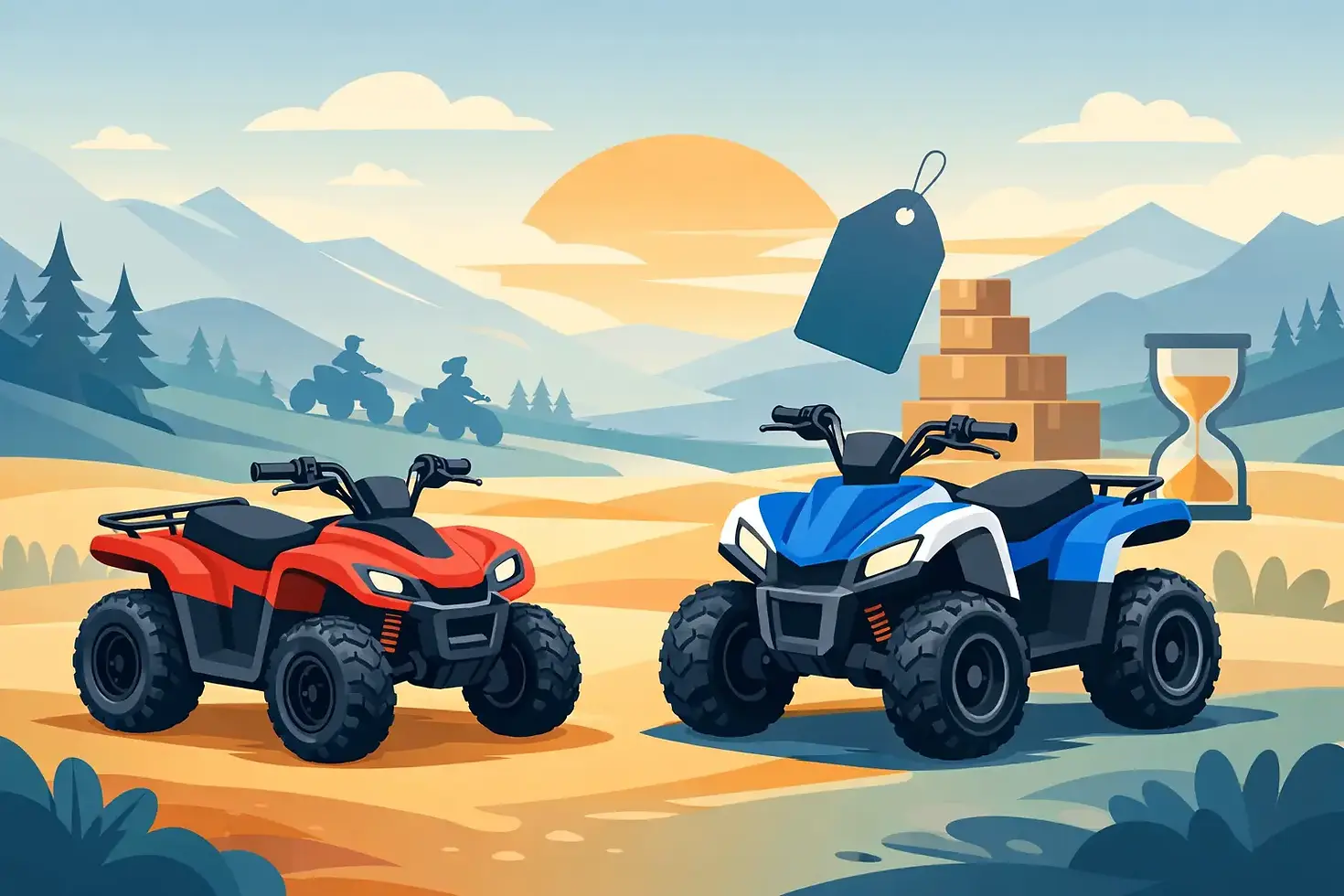
Kids ATV's Starting at $799 Plus Fees, While Supplies Last

A first ATV is a big moment. It is the machine that turns a family property, a trail day, or a weekend campout into the kind of story kids repeat for years. Kids ATV's starting at $799 plus fees. Offer good while supplies last. That price point can make getting a young rider started more realistic, but the right choice still comes down to fit, supervision, protective gear, and honest answers about how your family plans to ride.
For Temecula, Murrieta, and Riverside County families, the smart move is to shop early, ask questions in person, and make sure the youth ATV you choose is appropriate for the rider instead of simply choosing the lowest-priced unit.
Kids ATV's Starting at $799 Plus Fees: What the Offer Means
A starting price gives families a clear entry point, not a one-size-fits-all final purchase. The available youth ATVs, colors, displacement options, and features can change as inventory moves. “While supplies last” matters here: once a particular unit is gone, it may not be available at that price or in that configuration.
The “plus fees” portion should be part of the conversation before you commit. Ask for a straightforward breakdown of the out-the-door cost, including applicable taxes, registration-related charges where required, documentation, setup, and any other dealership fees. Knowing the complete number helps you compare options honestly and plan for the gear and service your young rider will need.
Price matters, especially when you are buying a first machine. But an ATV that fits the rider, starts reliably, and can be supported locally after the sale is usually the better value than a bargain that leaves you guessing about parts, maintenance, or safe operation.
Start With Rider Fit, Not Just Age
Youth ATVs are not interchangeable. A rider's age, height, weight, coordination, confidence, and prior riding experience all matter. Two kids of the same age can need very different machines. One may be ready to learn controlled starts and turns on a small ATV, while another may need more time on a slower, simpler setup.
The best starting point is to have the rider sit on the ATV. They should be able to reach the controls comfortably, hold the handlebars without stretching, and understand where the brake and throttle are before the engine is running. Their feet, riding posture, and ability to follow instructions are part of the decision.
Parents should also think about where the ATV will be used. A flat, controlled private riding area calls for a different approach than rough terrain, hills, deep sand, or a busy off-road riding area. If your plan includes changing terrain as skills improve, ask about features that help adults maintain control of the learning process, such as adjustable speed limiting where available.
Build the First Ride Around Safety
A youth ATV is not a toy to hand over and hope for the best. A good first day should be calm, supervised, and intentionally boring in the best possible way. Before a child heads toward an open area, walk through the controls, riding position, starting procedure, stopping procedure, and what to do if they feel uncomfortable.
Every ride calls for properly sized protective equipment. A helmet is the baseline, followed by eye protection, gloves, over-the-ankle boots, long sleeves, and long pants. Gear needs to fit now, not after a child “grows into it.” Loose helmets, oversized gloves, and boots that do not stay secure can interfere with control.
Set rules before the engine starts. Ride only in approved areas. Keep the ATV away from public roads. No passengers unless the ATV is specifically designed and equipped for them. No riding without adult supervision. No showing off, racing, or trying terrain beyond the rider's ability. These rules are not meant to take the fun out of riding. They are what keep a fun family activity from becoming an expensive and painful lesson.
Formal hands-on ATV safety training is also worth considering. Kids learn faster when they understand why throttle control, body position, braking distance, and looking ahead matter. Parents benefit too, especially if they did not grow up riding.
Budget for the Whole Riding Experience
The starting price is only one line in the family ATV budget. Plan for the items that make riding safer and ownership easier. In addition to the unit and applicable fees, most families should set aside money for protective gear, fuel, basic maintenance, transport if needed, and a secure place to store the ATV.
Service is another practical consideration. Like any powersports machine, a kids ATV needs routine attention. Tires need inspection, brakes need checking, fasteners should be looked over, and fluid or battery needs depend on the specific model. A machine that sits for months without proper care may not be ready when the next riding weekend arrives.
This is where working with a local powersports operation makes a real difference. Rebel Racing Motorsports can help Southern California families look beyond the initial purchase, with vehicle options plus maintenance, repairs, tire work, and support when a machine needs attention. The goal is simple: spend less time chasing problems and more time getting back on the dirt.
Questions to Ask Before You Buy
Before choosing from kids ATV's starting at $799 plus fees, get clear answers about the specific unit in front of you. Ask whether it is intended for your child's size and skill level, what controls or safety features it includes, and what routine maintenance it requires. If there is a speed-management feature, ask how it works and whether an adult can adjust it.
You should also ask what comes with the vehicle, what assembly or setup has been completed, and what the final out-the-door price will be. If you are shopping for more than one child, do not assume they should ride the same size ATV. Matching the machine to each rider may be safer and more enjoyable, even if it means making separate decisions.
For families with limited space, discuss storage and transportation before bringing an ATV home. Measure the garage area, trailer, truck bed, or enclosed storage location. Consider how the machine will be secured when not in use. These small details prevent a lot of frustration after the sale.
Shop Early While Supplies Last
A strong entry price can move youth ATVs quickly, particularly when families are planning for birthdays, holidays, school breaks, or a season of desert and trail riding. Waiting for the “perfect” moment can mean the unit you wanted is already gone. At the same time, there is no reason to rush past the safety and fit questions that matter.
Visit with your rider, look at the available inventory, and be upfront about experience level and where the ATV will be ridden. A knowledgeable team can point you toward a more sensible starting machine than an online listing ever will. If the exact unit you want is not on the floor, ask what can be sourced.
The right youth ATV is not just about getting the lowest number on a tag. It is about giving a young rider a controlled, confidence-building start that keeps the whole family excited to load up and ride again next weekend.


Comments