


Kids ATV's Only $799: What Parents Should Check

A listing for kids ATV's only $799 gets attention for a good reason: it can put a young rider on four wheels without spending the same money as a full-size machine. But a low price is only a win when the ATV fits the rider, runs correctly, and comes with the support your family needs after the first ride. For parents in Temecula, Murrieta, and across Riverside County, the goal is simple - get the kids outside, keep the experience controlled, and avoid buying a machine that becomes a garage project.
A youth ATV can be a great introduction to throttle control, braking, terrain awareness, and responsible off-road riding. The right one builds confidence. The wrong size, speed, or setup can make a new rider nervous before they have a chance to enjoy the dirt.
Kids ATV's Only $799: Start With the Rider
Price matters, but rider fit matters more. A youth ATV should match a child’s age, size, strength, maturity, and actual riding experience. Two kids of the same age can need completely different machines. One may be ready for a larger platform with a controlled throttle setting, while another is better off learning on a smaller ATV with gentle power delivery.
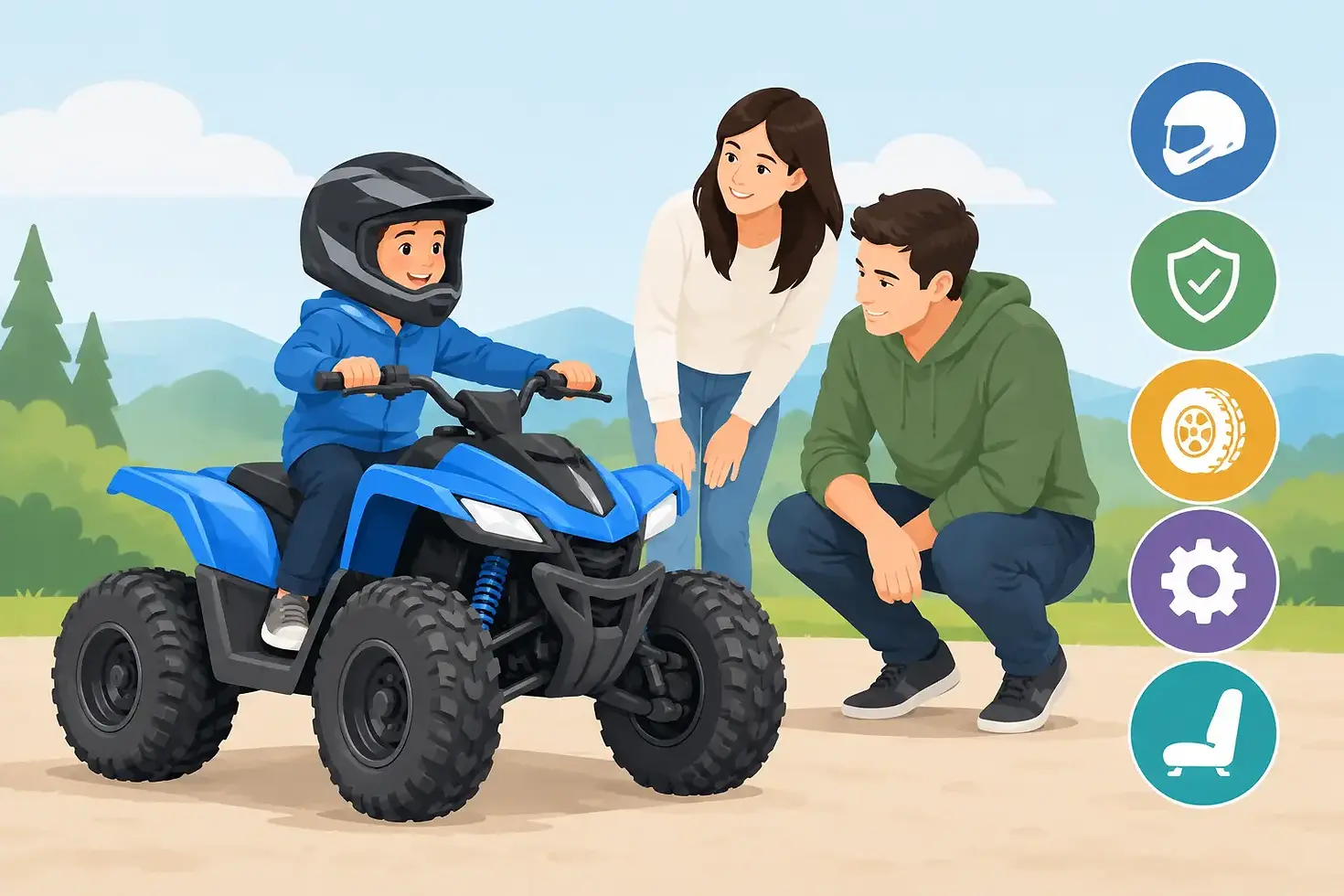
Have your child sit on the ATV before you buy. They should be able to reach the controls comfortably, operate the brake lever without struggling, and keep their body stable with both feet where they belong. If they are stretching to steer or cannot work the controls with confidence, that machine is not the right starting point.
Engine size is part of the conversation, but it is not the whole story. Small youth ATVs are often available in configurations around 50cc, 70cc, 110cc, or similar displacement ranges. Larger numbers can mean more power, but setup, gearing, rider weight, and throttle adjustment all affect how the ATV feels on the trail. A machine that sounds affordable can become expensive fast if it is too much ATV for the rider.
A $799 ATV Is a Starting Price, Not the Whole Budget
When you see a youth ATV advertised at $799, ask what is included and what you will need before riding day. Taxes, registration requirements where applicable, assembly or setup, delivery, protective gear, maintenance items, and repair coverage can all affect the out-the-door number.
The non-negotiable expense is safety gear. A properly fitted DOT-approved helmet comes first. Add goggles, gloves, over-the-ankle boots, long pants, and a long-sleeve riding jersey or shirt. Chest protection and knee protection are smart additions, especially when a rider is moving beyond a flat practice area.
It also pays to budget for ownership, not just purchase. Youth ATVs still need oil checks, air-filter service, chain inspection if equipped, brake checks, tire-pressure adjustments, battery care, and fuel-system attention. A small machine that is maintained will start easier, run cleaner, and give your rider a more predictable experience.
What to Inspect Before Bringing It Home
Whether the ATV is new or pre-owned, do not let a fresh set of plastics make the buying decision for you. Look at the mechanical condition first. Start it cold if possible, listen for abnormal rattles or smoke, and make sure it idles without constantly dying.
Check the throttle for smooth return and verify that the brakes engage firmly. Inspect tires for cracking, uneven wear, puncture repairs, and low tread. Look under the ATV for leaks, loose hardware, damaged skid areas, or bent suspension pieces. On a used model, worn grips, bent handlebars, damaged brake levers, and heavily scraped floorboards can reveal how hard it has been ridden.
Ask whether the machine has a working remote shutoff, tether kill switch, or adjustable speed limiter if those features are offered on that model. These controls do not replace supervision, but they give parents more control while a child is learning. A speed limiter lets you begin slowly and increase available power as skill improves instead of forcing a young rider to manage full output on day one.
For gas-powered youth ATVs, ask about the fuel type, oil requirements, starting procedure, and recommended service intervals. For electric models, ask about charging time, battery replacement cost, range, and whether the battery and charger are included. Electric youth ATVs can be quiet and easy for backyard-style practice, but ride time and terrain capability may be limited. Gas models usually offer longer sessions and more flexibility, while requiring more routine maintenance.
Set Up a First Ride That Builds Confidence
The first ride should not happen on a rocky hill, a crowded trail, or an open area with adult machines flying by. Start on flat, open dirt with room to turn and stop. Walk the area first and remove obvious hazards such as holes, loose wire, steep drop-offs, and hidden obstacles.
Keep the lesson short. A new rider needs time to understand where the throttle, brakes, and kill switch are without being overloaded. Show them how to start, stop, turn gradually, and release the throttle before braking. Then let them practice one skill at a time.
Young riders should always have active adult supervision. That means an adult who is close enough to intervene, not someone watching from inside the house or across a riding area. Follow the manufacturer’s age recommendations, keep riders off public roads, and make the one-rider-only rule clear. Most youth ATVs are not built for passengers, and adding one changes the balance and braking behavior immediately.
As skills grow, teach respect for the machine. No showing off, no riding beyond visibility, no shortcuts through areas you have not inspected, and no riding without gear. Those habits matter far more than how quickly a child moves up to a bigger ATV.
New vs. Used: Which One Makes Sense?
A new youth ATV may make sense for parents who want a clean starting point, current safety features, and the confidence of knowing how the machine has been treated from its first hour. It can also be easier to get parts support and service information for a current model.
A used youth ATV can be a strong value when it has been cared for, serviced, and inspected properly. Kids often outgrow smaller ATVs before putting many serious hours on them, so a clean used machine may leave more room in the budget for gear, maintenance, and a better riding setup. The trade-off is that condition varies widely. A cheap used ATV with carburetor issues, worn brakes, damaged wiring, or missing parts is not a bargain if it spends more time waiting for repairs than running.
This is where buying from a local powersports operation can make a difference. You need someone who can help with vehicle selection, inspect a concern, handle routine service, and find parts when something eventually wears out. Rebel Racing Motorsports serves families across Temecula, Murrieta, and Riverside County with youth-oriented powersports options and hands-on service support, so you are not left guessing when your kid’s ATV needs attention.
Questions Worth Asking Before You Commit
Before you finalize the deal, get direct answers about the ATV’s condition, included equipment, service needs, and support. Ask whether it has been inspected, whether the tires and brakes are ready to ride, and whether a throttle limiter or parental-control feature is installed and working.
For a used ATV, ask about prior repairs, storage conditions, title or ownership documentation when relevant, and any known issues. For any model, ask how easy replacement parts are to source. Plastic can crack, batteries wear down, and kids have a way of finding the one rock in an otherwise empty field. Parts availability matters.
Also consider where the ATV will actually be ridden. A compact ATV suited to a controlled private riding area may not be the same machine a family needs for supervised trail use. Be honest about your terrain, your child’s experience, and how often the vehicle will be used. The best choice is not always the biggest machine or the lowest advertised price. It is the one your child can handle safely and enjoy consistently.
A $799 youth ATV can be the beginning of weekends spent in the dirt instead of on the couch. Take the extra time to check fit, controls, condition, gear, and service support, then set that first ride up for success. A confident young rider starts with a machine that feels right the moment the wheels touch the ground.


Comments